
 English
 Español
 Pусский
 العربية
Cabo de bandeja galvanizado
Galvanized Tray Cable: An Overview Galvanized tray cable is a type of electrical cable designed for use in cable tray systems, offering durability, flexibility, and resistance to environmental factors. It is commonly used in industrial, commercial, and utility applications where cables need to be supported in trays rather than buried or run through conduits. The "galvanized" aspect refers to the protective zinc coating applied to the cable’s armor or tray, enhancing corrosion resistance and extending the cable’s lifespan in harsh conditions. Construction and Features Galvanized tray cables typically consist of multiple insulated conductors bundled together within a robust outer jacket. The conductors are often made of copper or aluminum, insulated with materials like PVC, XLPE, or rubber to withstand high temperatures, moisture, and mechanical stress. The cable may also include shielding for electromagnetic interference (EMI) protection, depending on the application. A key feature of galvanized tray cables is their armor or outer protection. Some variants use a galvanized steel wire armor (GSWA) or interlocked metal tape to provide mechanical strength, crush resistance, and rodent protection. The galvanized coating prevents rust and corrosion, making the cable suitable for outdoor or humid environments, such as chemical plants, oil refineries, or marine installations. Applications Galvanized tray cables are widely used in: - Industrial Facilities: Power and control wiring in manufacturing plants, refineries, and mining operations. - Commercial Buildings: Distribution of electricity in large complexes where cable trays are preferred over conduits. - Renewable Energy: Solar farms and wind turbines, where cables are exposed to weather and UV radiation. - Infrastructure Projects: Transportation hubs, tunnels, and wastewater treatment plants requiring long-term durability. Advantages 1. Corrosion Resistance: The galvanized coating ensures longevity in corrosive or wet environments. 2. Mechanical Protection: Armored variants resist physical damage from impact, abrasion, or tension. 3. Flexibility: Tray cables are designed for easy installation in trays without excessive bending stress. 4. Fire Resistance: Many galvanized tray cables meet fire safety standards, such as flame-retardant (FR) or low-smoke zero-halogen (LSZH) ratings. Installation Considerations When installing galvanized tray cables, factors like bend radius, load capacity, and environmental exposure must be considered. Proper securing with tray clamps or ties prevents sagging, and adherence to electrical codes ensures safety. Conclusion Galvanized tray cables provide a reliable, long-lasting solution for power and signal transmission in demanding environments. Their combination of corrosion resistance, mechanical strength, and adaptability makes them a preferred choice for modern electrical infrastructure. Whether in industrial settings or renewable energy projects, these cables ensure efficient and safe power distribution.
Produto
Categoria:
-

Caminho de cabos galvanizado
Sua classificação: Bandeja de cabos de longo alcanceVistas: 35Número:Tempo de liberação: 2025-11-22 03:32:24Devido ao curto-circuito do ventilador de alta temperatura fora do cabo, ocorreram curtos-circuitos em todas as partes do cabo. Geralmente, isso é causado pela má qualidade do cabo devido à exposição ao vento, resultando em graves danos ao cabo nos pontos defeituosos; no entanto, vestígios óbvios ainda permanecerão. Quando ocorre um curto-circuito na bandeja de cabos, todo o cabo pode queimar e a folga do cabo no ponto defeituoso é pequena. -
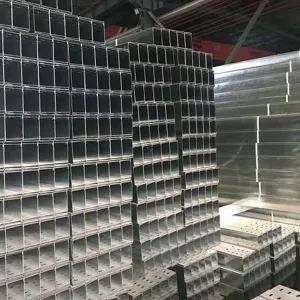
Caminho de cabos galvanizado
Sua classificação: Bandeja de cabos de longo alcanceVistas: 34Número:Tempo de liberação: 2025-11-22 03:35:59Instale um conjunto de dispositivos tensores sob a bandeja de cabos. A eletrocalhas galvanizada forma um arco sob a tensão dos tendões tensores. Isto gera compressão na tampa inferior da bandeja e tensão na tampa superior. Esta força é oposta à tensão causada pelas cargas externas, compensando parte da força de trabalho e melhorando o estado de tensão da bandeja. Portanto, o método de protensão visa reforçar a bandeja e corrigir a deflexão. É simples e fácil de controlar, mas tem limitações: as válvulas elétricas de esfera não são fáceis de calibrar e a deformação da bandeja é complexa.

Notícias
Categoria:
Nenhum resultado de pesquisa!
Caso
Categoria:
Nenhum resultado de pesquisa!
Vídeo
Categoria:
Nenhum resultado de pesquisa!
Download
Categoria:
Nenhum resultado de pesquisa!
Recrutamento
Categoria:
Nenhum resultado de pesquisa!
Produtos recomendados
Nenhum resultado de pesquisa!



 Whatsapp
 Telefone
 Correspondência